| Title | Horae, ad usum Bisuntinae dioecesis |
| Date | Late 14th Century |
| Language | Latin and French |
| Link to Library Catalogue Entry | Bibliothèques et archives municipales de Besançon |
Material Presentation
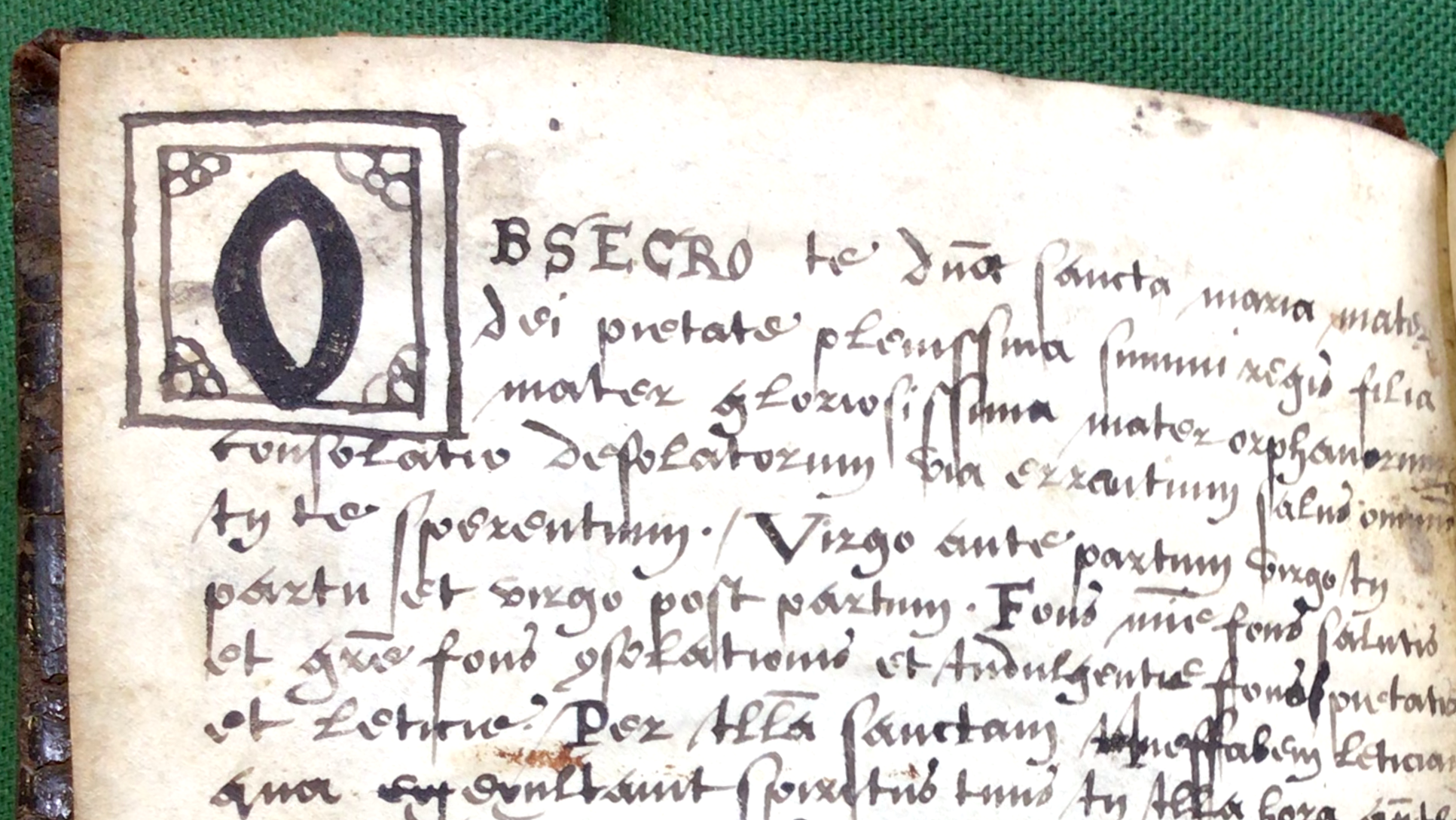
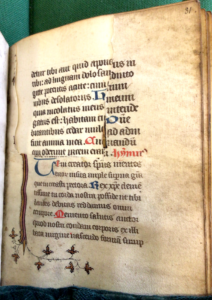
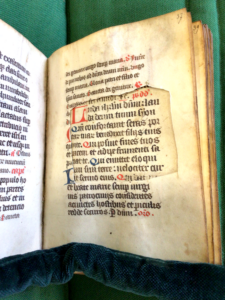
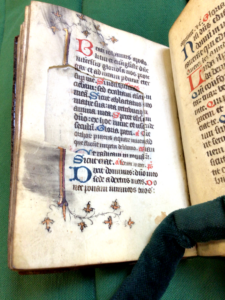
Manuscript MS 121 comprises 97 folios of parchment, measuring 145 × 105 mm. Originally adorned with miniature initials on golden backgrounds, many of these ornate elements have been lost or damaged over time due to wear and removal. The manuscript shows signs of extensive use, with the cover and spine displaying significant damage, especially across the raised bands (nerfs). Despite its wear, this manuscript offers a glimpse into the delicate artistry of the late 14th century.
Historical Background
According to Jean-Luc Deuffic’s study Une diaspora bretonne des artisans du livre: XIVe-XVe siècles, this manuscript is connected to the diocese of Besançon and reflects the broader tradition of Breton book artisans. This connection highlights the manuscript’s role in the religious and cultural life of the region, serving as a testament to the craftsmanship and devotion of its creators.
Ownership
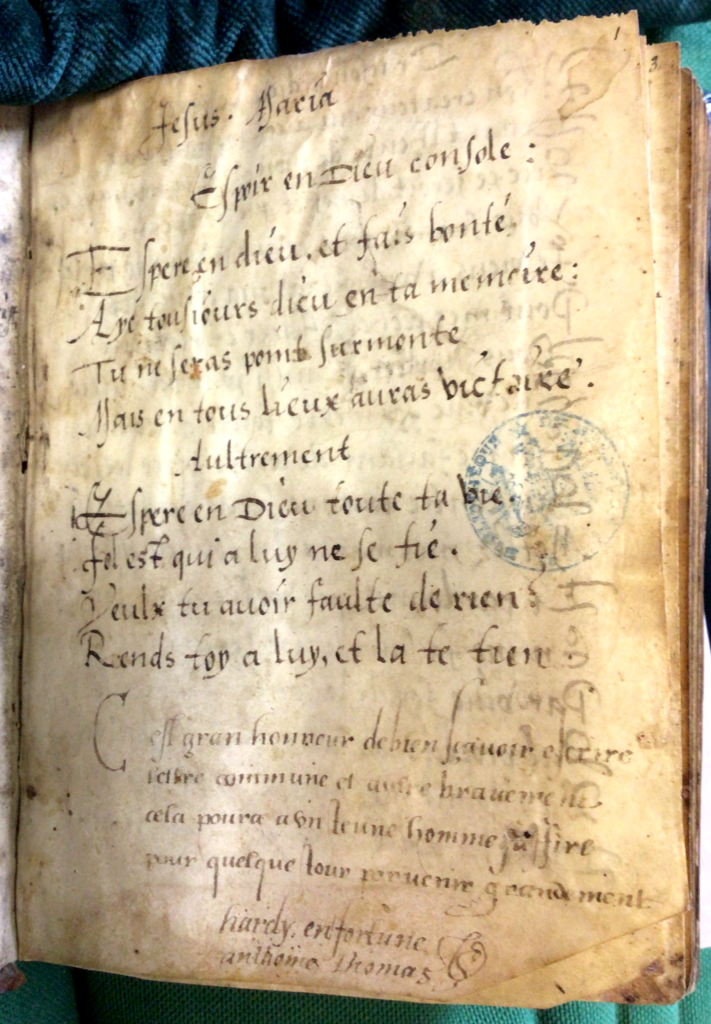
The manuscript bears the signature of a calligrapher named Alanus, found at the end of sections on fol. 44 and 88v. Additionally, fol. 1 features a quatrain inscribed by a former owner, Anthoine Thomas. A bookplate on fol. 89v marks the manuscript’s ownership by Brother Hilarion Lespaly, a hermit from Arbois, dating back to 1685.
Personal Annotations
The manuscript contains numerous handwritten prayers in French, suggesting it was a deeply personal item. The first four pages are filled with handwritten prayers, possibly written in three to four different handwriting styles, reflecting the manuscript’s use by multiple individuals over time. These annotations lend a unique, intimate character to the manuscript, as they reveal its importance in personal devotional practices.
Calendar
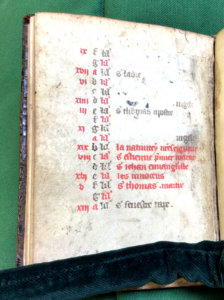
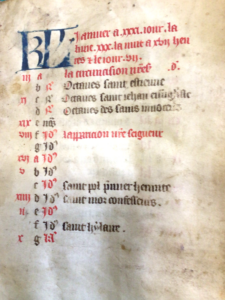
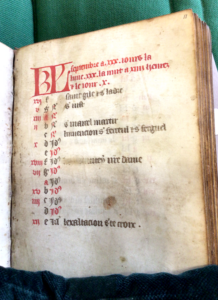
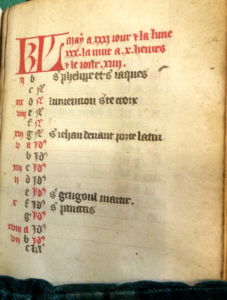
Observations
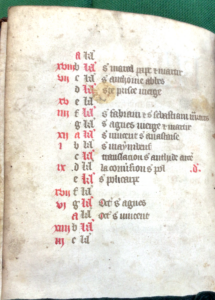
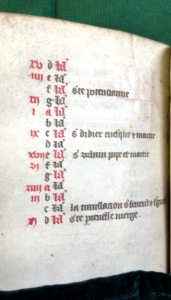
The once vibrant initials have suffered from considerable abrasion, with many initials and miniatures cut out entirely. Despite this loss, traces of red rubrics and blue-painted letters remain visible, particularly at the start of hymns. For example, the “G” in Gloria patri is still painted blue. Pages that once bore gilded initials and decorative borders retain delicate vine motifs framed in gold. These remnants indicate the high level of craftsmanship that went into creating the manuscript.
Educational Use
Interestingly, the manuscript also bears witness to its use as a teaching tool. Several alphabets were added by a later owner, suggesting that the manuscript may have been used for teaching reading and writing. This adds another dimension to its historical significance, as it reflects the evolving purposes of the manuscript over time.