| Title | Horae, ad usum Bisuntinae dioecesis |
| Date | Mid – 15th Century |
| Language | Latin |
| Link to Library Catalogue Entry | Bibliothèques et archives municipales de Besançon |
Material Presentation
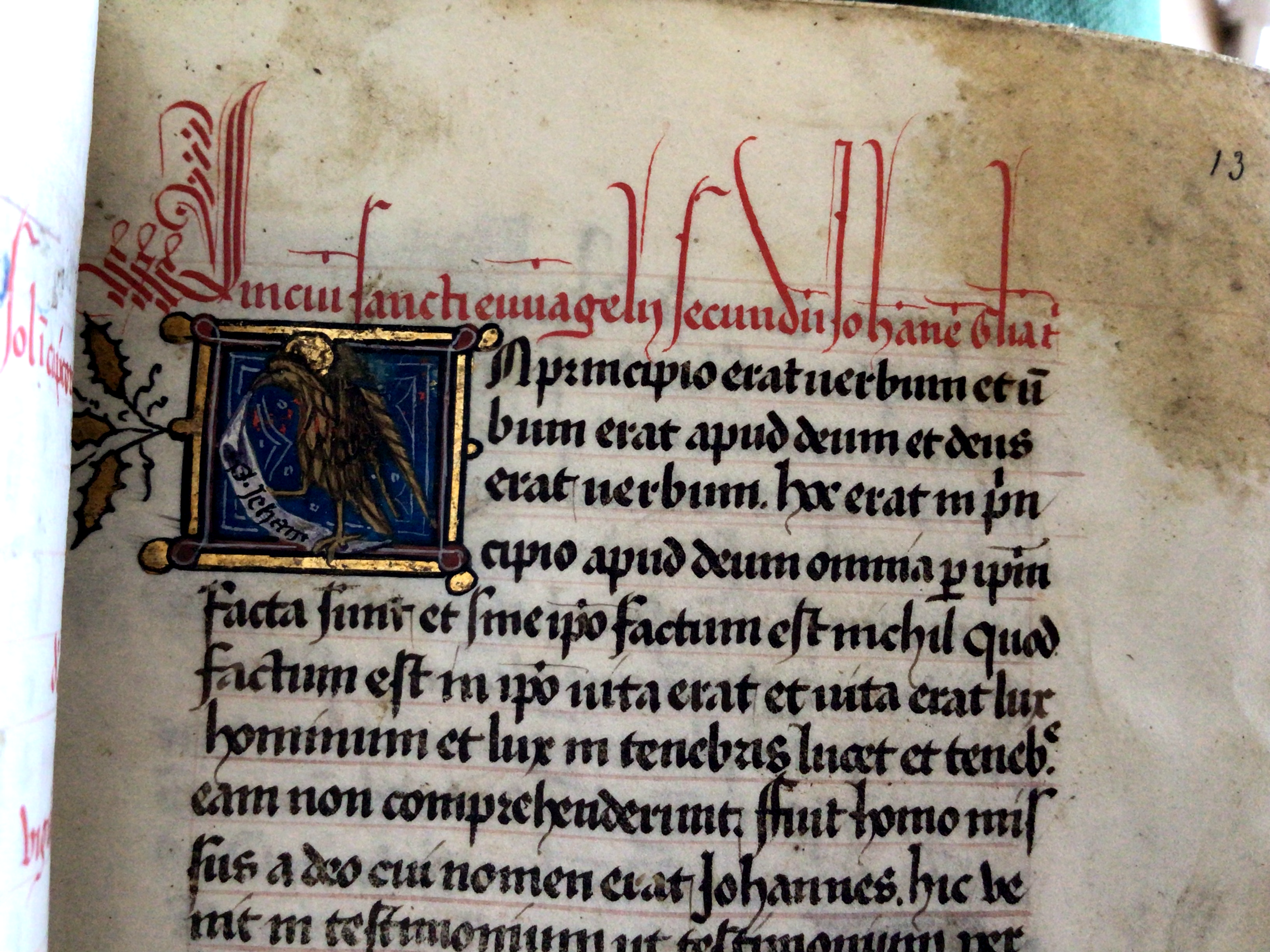
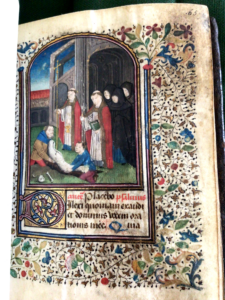
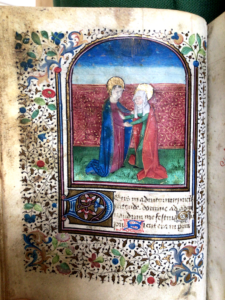
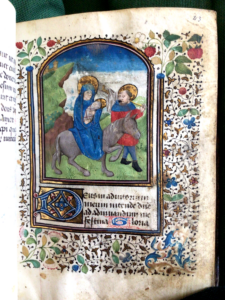
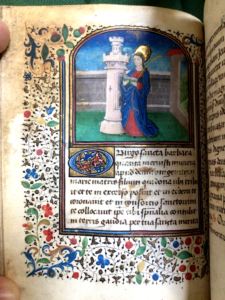
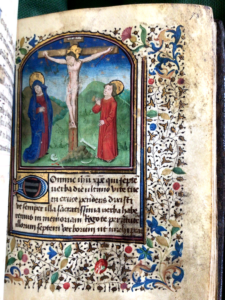
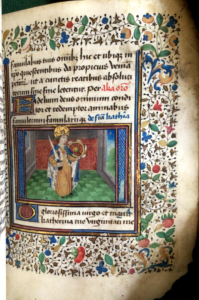
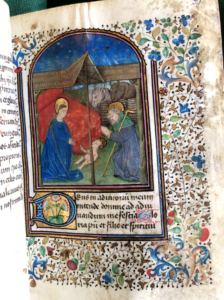
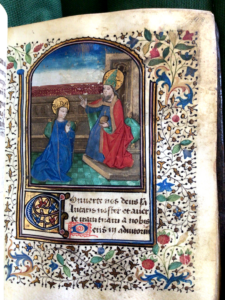
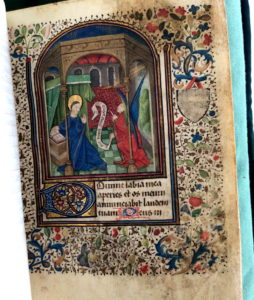
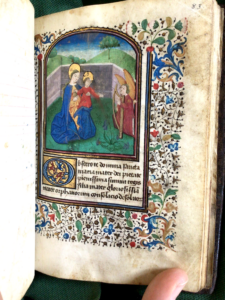
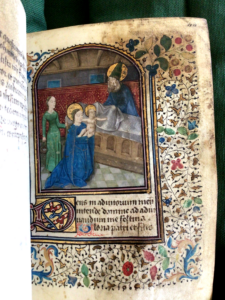
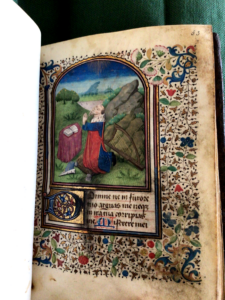
This manuscript comprises 115 folios, measuring 143 × 100 mm. It is written on vellum and features elaborate decorations, including initials filled with flowers on a background of burnished gold. The miniatures are finely detailed, some depicting architectural or landscape perspectives. Notable miniatures include depictions of the Evangelists’ symbolic animals (fol. 13-15v), the Annunciation (fol. 17), the Visitation (fol. 23v), and various scenes from the life of Christ, such as the Nativity (fol. 31), the Adoration of the Shepherds (fol. 34), and the Adoration of the Magi (fol. 37). The manuscript is ruled in pink ink, and several miniatures have suffered damage over time.
Historical Background
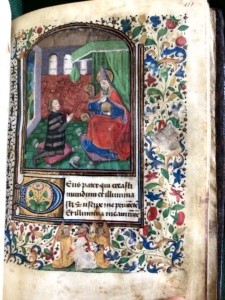
The manuscript was donated to the library in 1838 by the librarian Ch. Weiss. In the 17th century, this Book of Hours was in the possession of the family of the painter Brullez from Besançon. The manuscript is part of the Enluminures Collection. Véra F. Vines referenced this manuscript in her study “A Centre for Devotional and Liturgical Manuscript Illumination in Fifteenth-Century,” found in The Art of the Book: Its Place in Medieval Worship, edited by Manion M. and Muir B. (Exeter University Press, 1998, pp. 196-223). The manuscript likely belonged to Jean IV de Saint-Mauris, an esquire of Philippe the Good, later chamberlain to Charles the Bold and Louis XI, who died in 1483. His coat of arms, described as “sable, two bars argent,” appears in several miniatures, along with his depiction kneeling before the Eternal Father on fol. 111.
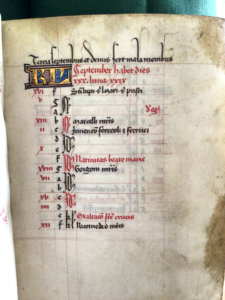
Calendar
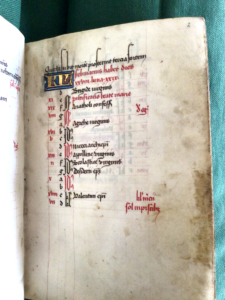
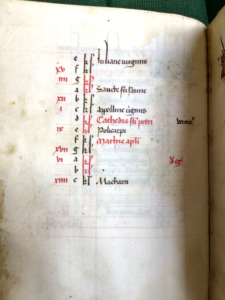
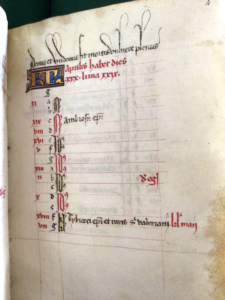
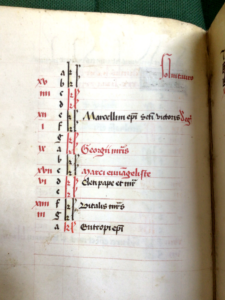
Pigments
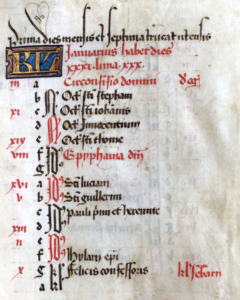
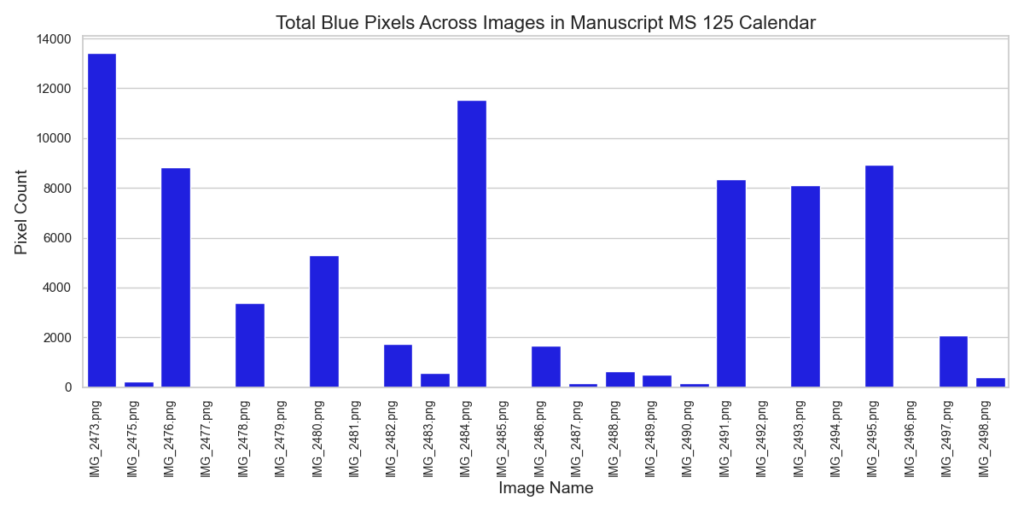
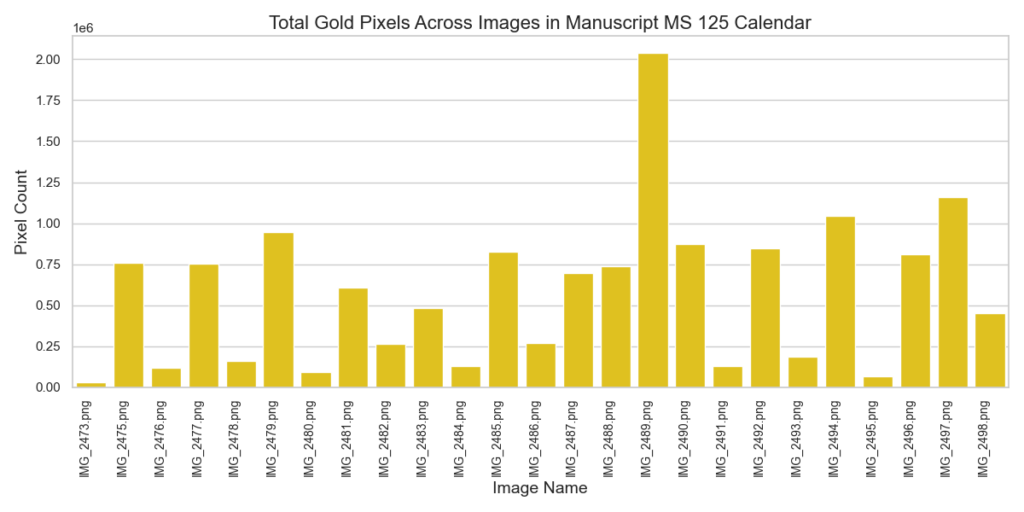
Using a custom Python script, an analysis was conducted to quantify the use of blue and gold pigments in the manuscript’s calendar pages.
Illustrations and Borders
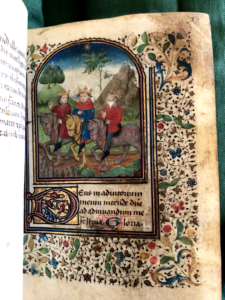
The first page of every Hour, calendar, Gospel and Psalms shows calligraphic writing. The script is gothic but has tried to imitate a thinner script. We can also observe the artistic expression of the scribe in the calendar, on the page for December. At the start of Gospel there are decorated initials with miniatures of respective animals, birds associated with evangelists to show the gospel lessons. The other illustrations are well made with abundant use of gold and blue colors. There are multiple decorated pages and also pages with decorated initials.
Pigments
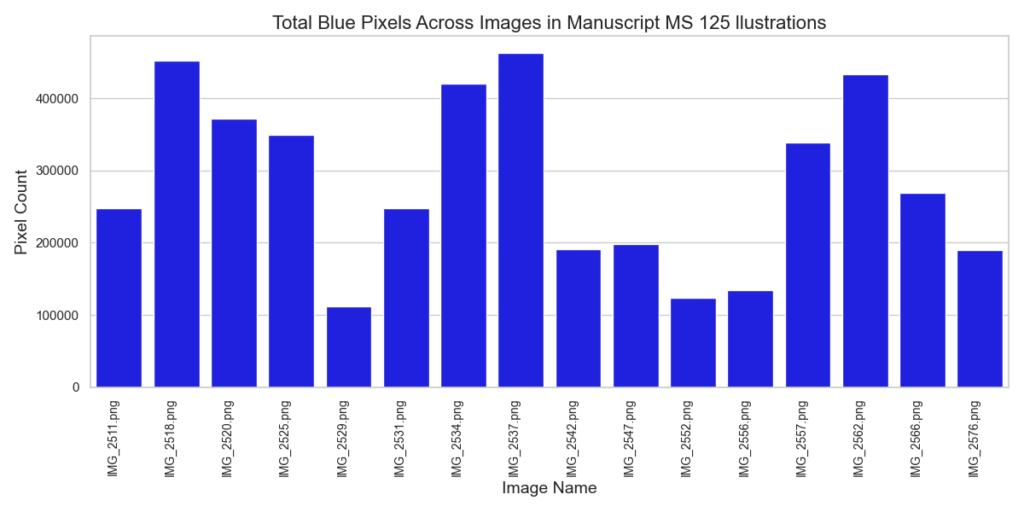
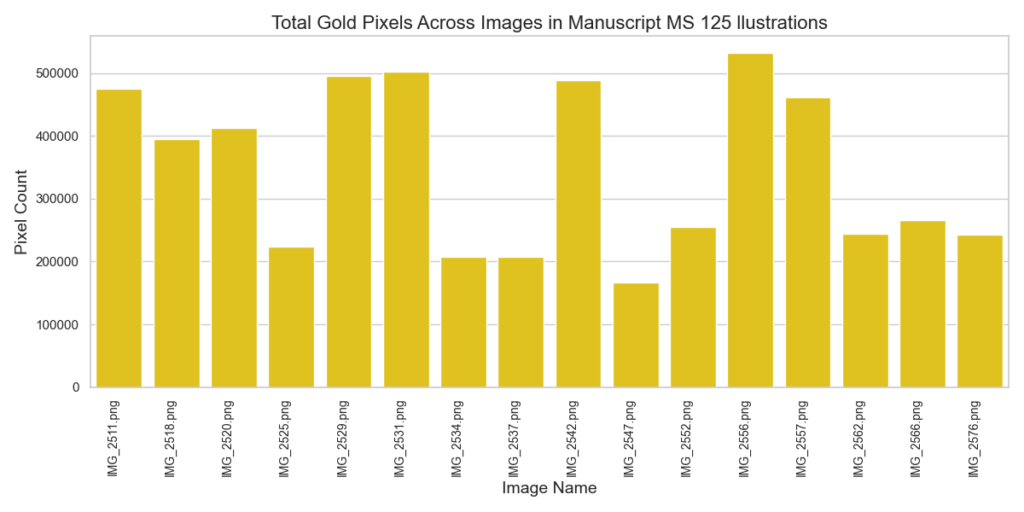
Using a custom Python script, an analysis was conducted to quantify the use of blue and gold pigments in the manuscript’s illustrations.